The Southeast Pacific data and Information Network in support to Integrated Coastal Area Management (SPINCAM) Project aims to establish an ICAM indicator framework in each country of the
Southeast Pacific region (Chile, Colombia, Ecuador, Panama and Peru),
focused on environmental and socio-economic conditions within the
context of sustainable development and integrated coastal area
management. SPINCAM is funded through the Flanders-UNESCO Trust Fund for Science (FUST).
IODE, through the National Oceanographic Data Centres (NODCs) in the participating countries as well as ODINCARSA are partners in this new project by building information systems at national and regional level that support
the development of indicators, their spatial representation, and the
dissemination of ICAM resources and experiences (including the
communication format(s) and strategy).
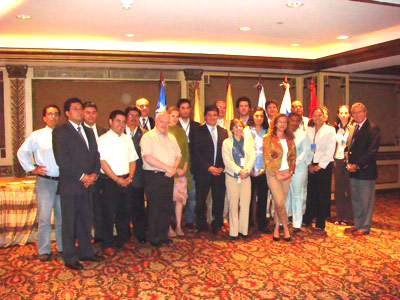
The start-up meeting of the SPINCAM project was held in Guayaquil, Ecuador on 10-11 June 2008. It was attended by the National Focal Points as well as some Technical Focal Points, the CPPS Secretariat, IOC/ICAM and IOC/IODE. In terms of data and information management the project will utilize the development and training process that was used also for the African Marine Atlas and Caribbean Marine Atlas.
All Powerpoint presentations of the "1st Marine Board Forum - Marine
Data Challenges: From observation to Information" held in Oostende,
Belgium on 15 May 2008 are available as Quicktime movies. Watch the movies through this LINK .
Press-release: Marine Board-ESF: Leading Experts on Data Collection and Data Policy attend the 1st Marine Board Forum "Marine Data Challenges: from Observation to Information" and related exhibition - 15 May 2008 Ostend, Belgium.
On the 15th of May 2008, the Marine Board brought together representatives of major European marine organizations and projects to discuss the importance of marine data and observation collection, management and processing in the frame of the ongoing debate about the creation of the European Marine Observation and Data Network (EMODNET) and its links to various initiatives, such as ESONET, EMSO, MerSEA, ECOOP, Euro-ARGO, EuroSITES, SeaDataNet, etc.
"It is essential at this moment to address such a topic" said Mr. Lars Horn, the Chair of the Marine Board "especially as many European and national policy makers do not have a vision of the value and structure of systems such as EMODNET for which the European Commission will establish a
roadmap in 2008 and an action plan in 2009. " [click on title to read more]
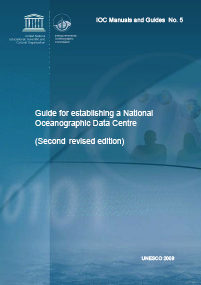
14 May 2008: IOC Manuals and Guides No.
5 (2nd revision) has now been revised. This Guide is intended as a
tool for policy makers at the national level to assist them with the
decision-making related to the establishment of national facilities
for the management of oceanographic data (and information). It is also
intended to be a reference document for national organizations involved
in, or planning to be involved in, oceanographic data and information
management.
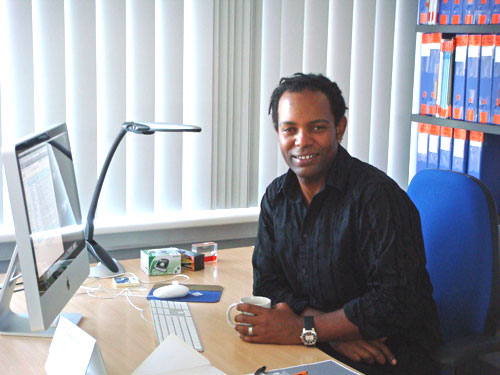
Oostende, 5 May 2008: Prince Mbekwa joins Project Office as IT expert
Mr Prince Mzukisi Mbekwa has joined UNESCO's IOC Project Office for IODE in Oostende, Belgium as an IT expert (programmer). Born in South Africa in 1976, Prince obtained a BA (Ed) from Rhodes University and Masters Degree in Information Technology from Port Elizabeth Technikon. As from 2002 he was Team Leader at the University of the Western Cape. In this capacity he was manager of the software development team for the AVOIR project (African network for caacity building in software engineering through Free Software).
At the Project Office Prince will be responsible for the development and maintenance of IOC/IODE web-based data and information services and for the oversight of the web sites hosted by the project office. In addition he will be lecturing on IT topics and assisting with the organization and implementation of SeaDataNet activities at the Project Office.
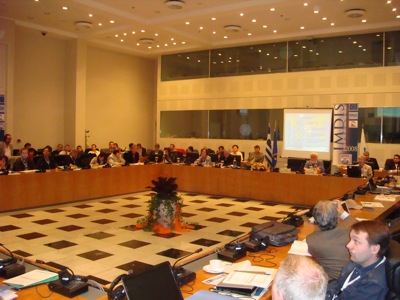
11 April 2008: The International Conference on Marine Data and Information Systems took place in Athens, Greece between 31 March and 3 April 2008. The Conference counted not less than 205 registered participants from 40 countries.[ more ]
3 April 2008: The ad hoc planning meeting for the JCOMM Pilot Project for the WMO Integrated Global Observing Systems (WIGOS) was
held in Ostend, Belgium on 29 March 2008 at the kind invitation of the
IOC Project Office for the International Oceanographic Data and
Information Exchange (IODE).
The aim of the WIGOS Pilot Project is to promote and develop
integration of marine and other appropriate observations into the
global observing system through three core deliverables (i) integration
of instrument best practices, (ii) development of interoperable
arrangements between the ocean data systems and the WMO Information
System (WIS), and (iii) the integration of quality management systems.





 marine organizations and projects to discuss the importance of marine data and observation collection, management and processing in the frame of the ongoing debate about the creation of the European Marine Observation and Data Network (EMODNET) and its links to various initiatives, such as ESONET, EMSO, MerSEA, ECOOP, Euro-ARGO, EuroSITES, SeaDataNet, etc.
 for the management of oceanographic data (and information). It is also
intended to be a reference document for national organizations involved
in, or planning to be involved in, oceanographic data and information
management.
for the management of oceanographic data (and information). It is also
intended to be a reference document for national organizations involved
in, or planning to be involved in, oceanographic data and information
management.
 Born in South Africa in 1976, Prince obtained a BA (Ed) from Rhodes University and Masters Degree in Information Technology from Port Elizabeth Technikon. As from 2002 he was Team Leader at the University of the Western Cape. In this capacity he was manager of the software development team for the AVOIR project (African network for caacity building in software engineering through Free Software).
 The Conference counted not less than 205 registered participants from 40 countries.[