In 2011 the IOC's International Oceanographic Data and Information Exchange (IODE) Programme will celebrate its 50th anniversary.
During their meeting in March 2010, the IODE Officers identified the
following activities and events to commemorate this important milestone
in the history of IODE.
Mr James Macharia is a Librarian at the Kenya Marine and Fisheries Research Institute, and has been actively involved in the development of several ODINAFRICA Marine Information products, including the Catalogue of Library Holdings (AFRILIB), and the Electronic Repository of Marine Related publications from Africa (OceanDocs Africa). He is a member of the International Association of Marine Science Libraries and Information Centres (IAMSLIC) and the Advisory Board for the Aquatic Sciences and Fisheries Abstracts database. In this capacity he has provided training to several ASFA input centres in Africa, and preparation of both Kenyan and IOC inputs into ASFA.
During his stay at the project office (20 March to end of June 2010), Mr Macharia will work on quality control of the AFRILIB and the Africa records in the Oceanexperts database, as well as the development of a database on ongoing/completed marine related projects in Africa, and updates to the ODINAFRICA websites.
The Summary Report of the 2010 Session of the IODE Officers Meeting is now available. The Session was held at the IOC Project Office for IODE, Oostende between 8-11 March 2010. The Meeting reviewed progress of the IODE-XX work plan and provided advice to the IODE Group of Experts and ODINs. The Officers also established the IODE Group of Experts on OBIS. Regarding 50th anniversary of IODE in 2011 the Officers had detailed discussions on acivities that will be organized to commemorate this important occasion.
Central
Chile yesterday was hit by a series of severe earthquakes. The major one off Concepcion
on Feb 27, 06:34 UTC had a magnitude of 8.8. The Pacific Tsunami Warning Center PTWC in
Hawaii, USA issued a regional warning at 06:46. The first sea level
measurements at Valparaiso with 1.3 m and Talcahuano with 2.3 m confirmed a
tsunami had been generated. PTWC revised and extended the affected region at
09:47. At 10:45 UTC the PTWC warned of a Pacific wide tsunami and subsequent
hourly messages expanded the warning to several areas in the Pacific
Ocean. Every hour the system coordinated by UNESCO and operated by
national agencies kept updating the established tsunami warning focal points
and media accessing the system. From Galapagos (1.0 m in Santa Cruz) to
Marquise Islands (1.8 m), or from Malibu (1.4 m) to Valparaiso (1.3 m) a near-real time sea level
monitoring system enabled emergency response agencies to order evacuation
or to warn locals about the risk of tsunami.
This
is the first real scale test of a system that was put in place nearly 50 years ago
by UNESCO’s Member States through its Intergovernmental Oceanographic
Commission (IOC), when a 9.5 magnitude earthquake on May 22, 1960 off Chile on
the Pacific Rim generated a tsunami heavily affecting Hilo in Hawaii or Sanriku
coast of Japan. It led to the establishment of the Pacific Tsunami
Warming System PTWS, operating since 1965 under the mandate of IOC-UNESCO. In
the aftermath of the Indian Ocean tsunami on Dec 26, 2004, building on this
experience, IOC-UNESCO established similar systems for the Indian Ocean, the
Caribbean and the seas around Europe to ensure a global cover for tsunami
hazards.
Click on the image to see full size representation of sea level observations by sealevel gauges (from the Sea Level Station Monitoring Service http://www.ioc-sealevelmonitoring.org/ service provided by IOC /VLIZ, Oostende, Belgium )
The summary report of the ODINCARSA (Ocean Data and Information Network for the Caribbean and South America region) Latin America sub-regional Planning Meeting, held in Ensenada, Mexico, between 7-10 December 2009 is now available HERE .
The meeting drafted the work plan of the project for 2010-2011 and also designated two regional coordinators (Ariel Troisi for data management, and Andrea Cristiani for information management).
At its 25th Session the IOC Assemblyto decided to accept OBIS within the IODE Programme and start its integration on a schedule that will ensure a smooth transition of OBIS into IOC as its responsibilities and funding under the CoML are completed. The Assembly further requested the IOC Executive Secretary to undertake the administrative arrangements necessary for OBIS
activities to continue under the auspices of IOC and its IODE Programme and, inter alia, to set up a multi-source fund within the IOC Trust Fund for the support of
OBIS. ThroughIOC Circular Letter No. 2333 (Establishment of a multisource trust fund for the support of the ocean biogeographic information system (OBIS)) the Trust Fund has now been established. It is hoped that Member States will be able to contribute to the Trust Fund so we can enable the adoption of OBIS by IOC/IODE a success thereby also contributing to the 2010 International Year of Biodiversity .
The IODE Workshop on QC/QA of Chemical Oceanographic Data was held at the IOC Project Office for IODE in Oostende, Belgium between 8 and 11 February 2010. The meeting, proposed and organized by the IODE Group of Experts on Biological and Chemical Data Management and Exchange Practices (GE-BICH ) welcomed 20 experts in chemical data management from 12 countries. The objective of the meeting was to define a minimum set of QC/QC procedures and criteria. The outcome of the meeting includes a proposal for a QC quality flag scheme (which will be submitted to the Ocean Data Standards process), terminology for dissolved inorganic nutrients and dissolved oxygen in seawater, a schema for 5 data processing levels and a work plan to prepare minimum QC tests for nutrients and oxygen. The report the meeting will be available in March 2010 and will be posted on the IODE web site. Find out more about the event HERE



 mation Exchange (IODE) Programme will celebrate its 50
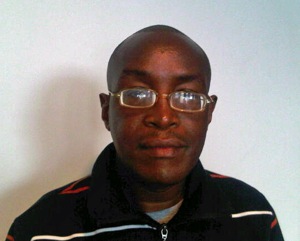 Mr James Macharia is a Librarian at the Kenya Marine and Fisheries Research Institute, and has been actively involved in the development of several ODINAFRICA Marine Information products, including the Catalogue of Library Holdings (AFRILIB), and the Electronic Repository of Marine Related publications from Africa (OceanDocs Africa). He is a member of the International Association of Marine Science Libraries and Information Centres (IAMSLIC) and the Advisory Board for the Aquatic Sciences and Fisheries Abstracts database. In this capacity he has provided training to several ASFA input centres in Africa, and preparation of both Kenyan and IOC inputs into ASFA.
 The Summary Report of the 2010 Session of the IODE Officers Meeting is now available. The Session was held at the IOC Project Office for IODE, Oostende between 8-11 March 2010. The Meeting reviewed progress of the IODE-XX work plan and provided advice to the IODE Group of Experts and ODINs. The Officers also established the IODE Group of Experts on OBIS. Regarding 50th anniversary of IODE in 2011 the Officers had detailed discussions on acivities that will be organized to commemorate this important occasion.

 The summary report of the ODINCARSA (Ocean Data and Information Network for the Caribbean and South America region) Latin America sub-regional Planning Meeting, held in Ensenada, Mexico, between 7-10 December 2009 is now available
  At its 25th Session the IOC Assemblyto decided to accept OBIS within the IODE Programme and start its integration on a schedule that will ensure a smooth transition of OBIS into IOC as its responsibilities and funding under the CoML are completed. The Assembly further requested the IOC Executive Secretary to undertake the administrative arrangements necessary for OBIS
activities to continue under the auspices of IOC and its IODE Programme and, inter alia, to set up a multi-source fund within the IOC Trust Fund for the support of
OBIS. Through
At its 25th Session the IOC Assemblyto decided to accept OBIS within the IODE Programme and start its integration on a schedule that will ensure a smooth transition of OBIS into IOC as its responsibilities and funding under the CoML are completed. The Assembly further requested the IOC Executive Secretary to undertake the administrative arrangements necessary for OBIS
activities to continue under the auspices of IOC and its IODE Programme and, inter alia, to set up a multi-source fund within the IOC Trust Fund for the support of
OBIS. Through 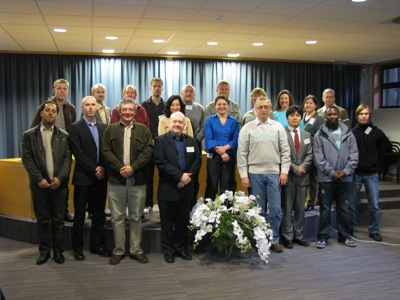 The IODE Workshop on QC/QA of Chemical Oceanographic Data was held at the IOC Project Office for IODE in Oostende, Belgium between 8 and 11 February 2010. The meeting, proposed and organized by the IODE Group of Experts on Biological and Chemical Data Management and Exchange Practices (