In response to Circular Letter 2527 (24/06/2014 ) the following candidatures were received:
- Ms Cyndy CHANDLER (USA)
- Prof (Mr) Yutaka MICHIDA (Japan)
- Dr (Ms) Guijun HAN (China) (*)
(*) this candidature withdrew her candidacy during the Session
Ms Cynthia CHANDLER
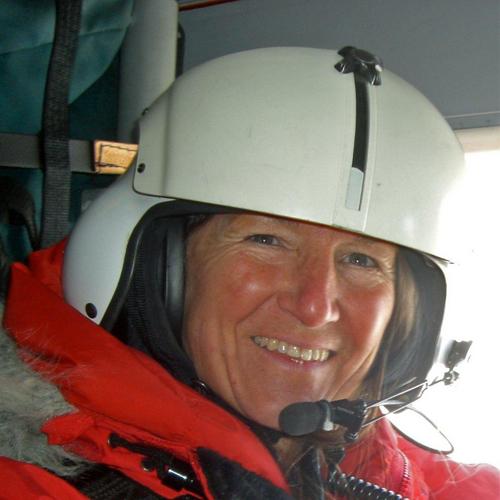 Current Place of Work: Information Systems Specialist, Woods Hole Oceanographic Institution (WHOI), Department of Marine Chemistry and Geochemistry
Education: 1975, BA Zoology, State University of New York, Geneseo; Marine Ecology, June-August 1975, Harvard University/Marine Biological Laboratory
Professional Scientific Experience:
Co-PI, Biological and Chemical Oceanography Data Management Office (BCO-DMO)
Lead WHOI PI, Rolling Deck to Repository (R2R)
Lead WHOI PI, NSF EarthCube OceanLink
Lead WHOI PI, NSF EarthCube GeoLink
Lead WHOI PI, Ocean Data Interoperability Platform (ODIP)
more information available from full CV
Participation in International Committees:
- Ocean Acidification International Coordination Centre (OA-ICC) Data Management Technical Group, 2013 – present
- Integrated Marine Biogeochemistry and Ecosystem Research (IMBER) Data Management Committee, December 2009 - present
- GEOTRACES Data Management Committee, 2007–2009
- Joint Global Ocean Flux Study (JGOFS) Data Management Task Team, US representative, 1995-2003
IODE service:
- Project representative, IODE XXII Conference, Ensenada, Mexico and instructor at pre-conference data management workshop (March 2013)
- Invited domain expert, IODE Group of Experts on Biological and Chemical Data Management and Exchange Practices (GE-BICH), 2010 - 2012
- Co-author, “Quality Flag Scheme for the Exchange of Oceanographic and Marine Meteorological Data", published April 2013 as UNESCO/IOC Manuals and Guides 54, Ocean Data Standards volume 3, version 1 (http://www.iode.org/mg54_3)
- Participant, IODE/SCOR/Jewett Foundation/MBLWHOI Library Working Group on Data Publication and Citation (2008 – present)
- Co-author, “Ocean Data Publication Cookbook” published March 2013 as UNESCO/IOC Manuals and Guides, 64 (http://www.iode.org/mg64)
Research Interests:
Marine data and information management; data management best practices; effective integration of modern cyber-information technologies into the marine research infrastructure
The IODE future: a personal perspective:
This is an exciting time to be an information and data manager in the marine research community. As advances in communication, computer technology, and marine science progress at a rapid pace, data managers are challenged to match their activities to keep pace with changing expectations. Evolving changes in expectations for open data access, near real-time access, and machine-machine interoperability are all causing shifts in the way data managers curate content in repositories, data centers and archives. The other notable change is the transition from isolated storage systems to federated systems designed to enable open exchange of data and information. Clearly we must work together to achieve these rapidly evolving goals.
I have had the privilege to contribute to several IODE efforts since first becoming aware of the organization in 2006. Involvement in IODE activities has broadened my understanding of marine data management and provided valuable opportunities to collaborate with experts from other countries. In 2013, IODE established a new way to expand the global community by acknowledging the role of Associate Data Units (ADUs). This is an important step in growing the IODE network, as it gives ADU representatives a mechanism to contribute to IODE activities and provides a mechanism for nations lacking a National Data Center to participate.
The value of the results of IODE initiatives will be realized as funding becomes available through the Belmont Forum and Future Earth research programs. IODE is well-positioned to contribute to and lead in several essential areas: data quality, standards promotion and adoption, data publication and citation, data preservation, and promoting open exchange of data and information. All of these activities will be important as marine research programs become more global and cross-domain in scope.
I am active in several organizations that promote collaborative research communities, most notably the Earth Science Information Partners (ESIP) in the United States, the Research Data Alliance (RDA) and the EU Framework 7 funded Ocean Data Interoperability Platform (ODIP) project. While each of these groups has a different focus, they are working to build and expand communities of practice with the goal of fostering collaborative research teams that come together to identify and meet shared challenges. Over the years IODE has been strategic in developing an infrastructure well designed for community support: Ocean Expert to identify potential colleagues and facilitate communication; Ocean Teacher to provide training materials; Ocean Docs to preserve information and improve access; and Ocean Data Portal to improve discovery of and access to data. I envision IODE continuing to serve an essential role in the future as facilitator of focused efforts in marine data and information management.
The exciting and challenging times will continue for marine data and information managers as global change research programs are redesigned to more explicitly include the human dimension. In summary, I would be honored to serve as co-chair of IODE for the upcoming term and contribute my expertise to our collective efforts.
Prof. Yutaka MICHIDA
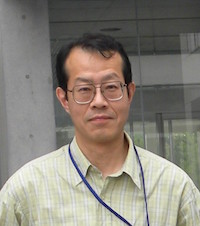 Current Place of Work: Professor, Atmosphere and Ocean Research Institute, The University of Tokyo, Japan
Education:
1981, B.S. (Geophysics), The University of Tokyo
1983, M.S. (Physical Oceanography), The University of Tokyo
1999, PhD (Physical Oceanography), The University of Tokyo
Professional Scientific Experience: Officer of JODC (Japan Oceanographic Data Center) for 4 years and the Deputy Director of JODC for 2 years (1997-1999),
Participation in International Committees:
- member of Data Products Committee of WOCE (World Ocean Circulation Experiment) for 1998-2002,
- member of IODE Review Team for 2003-2005,
- member of OOPC (Ocean Observations Panel for Climate) for 2002-2006,
- member of JCOMM/IODE ETDMP since 2010 and co-chair of ODSBP since 2010,
- Vice-Chair of IOC since 2011 (Group IV).
Research Interests: Physical oceanography, particularly on the structure and variability of ocean currents in the surface layers, and ocean/marine data and information management, having published 100 or more scientific and technical papers including 54 referred papers in international and national journals.
The IODE future: a personal perspective:
I have been deeply involved in IODE activities for the last 25 years, and participated in all the IODE sessions since the 16th meeting in Lisbon in 2000, except for the 21st meeting in Liege because of my unforeseen tasks for national activities to recover from tsunami disaster in 2011. IODE is one of the flagship and oldest programmes of IOC. IOC celebrated 50th anniversary of IODE in 2011, which obviously showed the importance of IODE in the world oceanographic and marine services communities. IODE has significantly contributed to these communities by facilitating the exchange of oceanographic data and information among Member States through its network of National Oceanographic Data Centers (NODCs) and Designated National Agencies (DNAs). IODE has also been trying to meet the emerging requirements from oceanographic and marine services communities by catching up with the innovation in oceanographic observations and information technology over the last half century.
IODE has made significant progress for the last 4 years by the great leadership of our co-chairs, Ms. Sissy IONA and Mr. Ariel TROISI, including closer collaboration with JCOMM through the activities of ETDMP, for example, enhancement of capacity development initiatives such as ODINs, and as an epoch making movement the introduction of the system of Associate Data Units (ADUs) in 2013.
IODE did a lot in the past. However IODE needs to do more, considering the changing environment in oceanography and marine services, while ensuring the continuation of present level of data management services. IODE covers and should cover a wide range of activities, among which, as a personal perspective, I would like to emphasize the importance of the following aspects for the next couple of years.
- Data portal and standards through ETDMP
It is one of the key issues for IODE to improve the accessibility to oceanographic data and information that IODE has been managing and exchanging internationally. The IODE Ocean Data Portal (ODP) should be continuously developed and enhanced to meet the requirements of global users. In terms of interoperability among a variety of data systems, IODE together with JCOMM has been leading Ocean Data Standard and Best Practices (ODSBP) project to establish a set of international standards for data exchange between data centers and/or data systems. Three standards have already been recommended and published as a series of UNESCO Manual and Guides vol. 54. As the ODP and ODSBP are both carried out within the JCOMM/IODE Expert Team Data Management Practices (ETDMP), IODE should continuously support the activities of ETDMP in close collaboration with JCOMM.
- Capacity development
Three countries have established their NODCs for the last 5 years, Malaysia in 2010, Mexico in 2011, and most recently Indonesia in 2014. IODE expressed its deepest welcome to these NODCs, as the network of NODCs is essential to promote oceanographic data and information management, in particular international exchange, within IODE. Establishment of an NODC is one of the most visible enhancements of the capacity for oceanographic data and information management at a national level. IODE should continue its efforts in capacity development in oceanographic data and information management at international, regional, national, and personal levels, as one of the activities of the highest priority. Along this line, IODE will keep supporting initiatives of ODINs in close collaboration with Member States.
- Data and information for policy making processes
The primary purpose of IODE is to enhance marine research, exploitation and development by facilitating the oceanographic data and information exchange internationally. The purpose implicitly includes providing oceanographic data and information for better marine policies both at national and international levels. Having considered the values of data and information IODE has been handling, and taking into account recent emerging interests of Member States in marine policy issues, I may suggest that IODE could support policy making processes from the view point of oceanographic data and information management, compilation of marine cadastre, construction of basic marine data and information for Marine Spatial Planning (MSP), for example. This is not deviation from the Terms of Reference of IODE. It is, on the contrary, to enhance the roles of NODCs in marine communities of Member States, and to lead the IODE to a more sound and sustainable data and information system.
- Cooperation with other organizations, programmes and projects, including ICSU, WMO, IHO and others
IODE has established close collaborations with other related organizations, in particular, with ICSU through its World Data System (WDS), previously its World Data Centers (WDCs) since 1960s when IODE started, and with WMO mainly through JCOMM initiatives. It is really essential for the future of IODE to continue and enhance these collaborations in oceanographic data and information management. IODE has introduced a new system, Associated Data Unit (ADU) at the 22nd Session in 2013, to improve international oceanographic data and information stream by inviting active organizations and data systems to join the international network. As ADU is the new system, it will be required to continuously be reviewed and improve the system toward better data and information system as a whole. With regard to the collaboration with research programs/projects, I would suggest that IODE should be more involved in them hopefully from their planning stages, as we did for the World Ocean Circulation Experiment (WOCE) in 1990s. IODE was fully involved in the planning and implementation of WOCE, and the Data Products Committee (DPC) of WOCE, in which several NODCs actively participated, monitored the data and information management and published 'WOCE Global Data' at the end of the project. It was a really important lesson for IODE to enhance the close collaboration with research sectors.
In conclusion, I would like to serve as one of the co-chairs of IODE for the next couple of years and enhance IODE's capability toward our brilliant future, based on all of my experiences in oceanography, data and information management, and international cooperation.
Dr (Ms) Guijun HAN
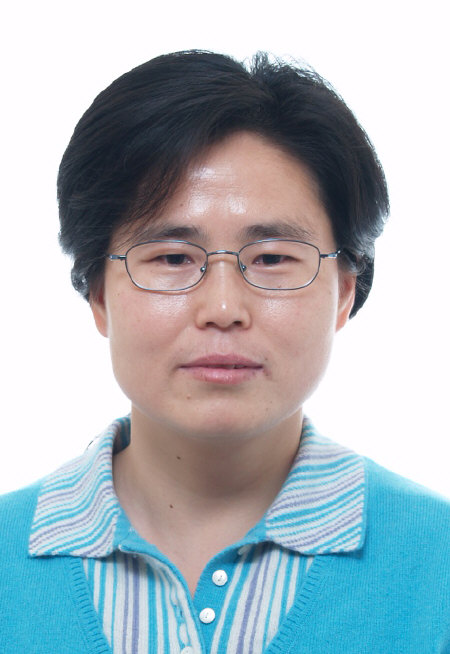 Current Place of Work: Senior Research Scientist of Physical Oceanography and Executive Director of the Key Laboratory of Marine Environmental Information Technology at the National Marine Data and Information Service (NMDIS) in Tianjin, China
Education: Ph.D. - Physical Oceanography, Institute of Oceanology, Chinese Academy of Sciences, Qingdao, P. R. China, 2001
Professional Scientific Experience:
· Executive Director, Key Laboratory of Marine Environmental Information Technology, State Oceanic Administration (2010 - present)
· Senior Research Scientist (2010 - present)
· Research Scientist (2003 - 2010)
· Associate Research Scientist (2001 - 2003)
· Assistant Research Scientist (1997 - 2001)
· NMDIS Academic Council Member (2010 - present)
more information available from full CV
Participation in International Committees:
· Member, Expert Team on Operational Ocean Forecast Systems (ETOOFS), JCOMM Services and Forecasting Systems Program Area (SFSPA) (2012 - present)
· Member, JCOMM Services Coordination Group, JCOMM Services Programme Area (2006 - 2009)
Research Interests:
· Quality Control of In situ Ocean Observational Data (ocean stations, CTDs, XBTs, and Argo)
· Processing of Altimetry Data (TOPEX/POSEIDON and Jason-1)
· Ocean Data Assimilation
· Coupled Data Assimilation
· Parameter Estimation
· Ocean Modelling
· Ocean Reanalysis System Development on Global and Regional Scales
· Ocean Forecasting System Development on Global and Regional Scales
The IODE future: a personal perspective:
For more than fifty years IODE has greatly enhanced the marine scientific research, integrated management, marine hazard mitigation, and all of IOC programs by facilitating the exchange of oceanographic data and information between participating Member States. NMDIS/China (National Marine Data and Information Service of China), as a national oceanographic data center, has benefited from efforts and accomplishments of IODE. From my personal point of view, based on my experience of scientific research dealing with oceanic data and information, first of all, IODE should continue to appeal the participation and support of Member States of IOC, especially members of IODE, through intergovernmental coordination of IOC. Secondly, IODE should continue to insist the tight cooperation with the other organizations and programmes such as WMO, ICSU, GOOS, JCOMM, Argo, etc.. Thirdly, IODE should continue to further enhance the exchange, management and service of oceanographic data and information, especially from my research experience, the development of the data and information products of IODE to meet the needs of Member/Member States and to enhance IODE itself as well. Fourthly, IODE should continue to enhance the capacity building of its Member/Member States to further strengthen the capacity of IOC. Through the full cooperation of the IODE Committee members, the goal -- each member of IODE willing to take the development of IODE as its own responsibility and obligation, can be reached.
I'm looking forward to having the opportunity to cooperate with the IODE Committee and hope that my participation in the election of the co-chair of IODE could bring new positive energy to the development of IODE.
- Details
-
Created on: Monday, 01 December 2014 14:06
-
Last Updated on: Monday, 23 March 2015 14:57